A straight and healthy smile is not only about appearance — it also plays a major role in oral health, confidence, and daily comfort. Many people in Faisalabad struggle with crooked teeth, overcrowding, gaps, or bite issues, but often delay treatment because they are unsure about braces and the available options.
Dental braces are one of the most effective orthodontic solutions for correcting teeth alignment and improving bite problems. Whether for teenagers or adults, braces help create a healthier smile that is easier to clean and maintain.
If you have difficulty chewing, notice uneven teeth, or feel self-conscious while smiling, it may be time to seek help from the best dental clinic in Faisalabad for professional orthodontic consultation and treatment.
What Are Dental Braces For?
Dental braces are orthodontic devices used to gradually move teeth into the correct position. They apply gentle, continuous pressure over time to align teeth and correct bite issues.
According to the Cleveland Clinic, braces are commonly used to treat:
- Crooked teeth
- Overcrowded teeth
- Gaps between teeth
- Overbite
- Underbite
- Crossbite
- Jaw alignment issues
Braces improve not just aesthetics but also oral function.
Properly aligned teeth are easier to brush and floss, which lowers the risk of cavities and gum disease.
Why Do People Need Braces?
Many people think braces are only for cosmetic reasons, but they also solve important dental health problems.
Misaligned teeth can lead to:
- Plaque buildup
- Gum inflammation
- Uneven tooth wear
- Jaw discomfort
- Speech issues
- Chewing difficulties
Orthodontic treatment helps prevent these long-term complications.
This is why braces are often recommended for both teens and adults.
What Are the 4 Types of Braces?
There are four main types of braces commonly recommended by orthodontists.
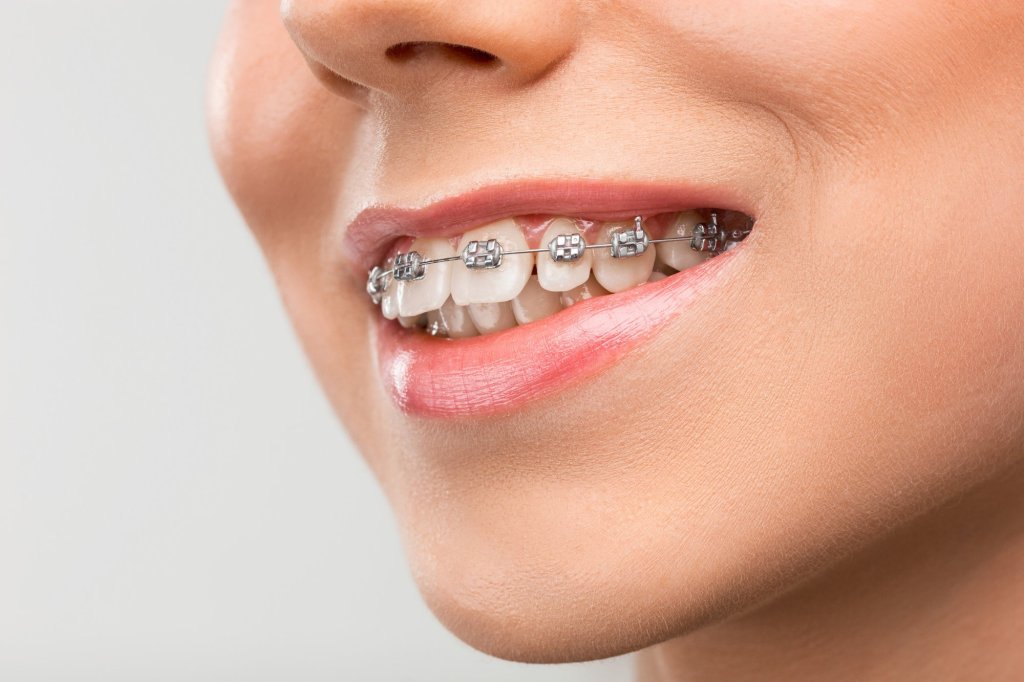
1. Traditional Metal Braces
Traditional metal braces are the most common type.
They use stainless steel brackets and wires attached to the front surface of the teeth.
Best for:
- Severe crowding
- Complex bite issues
- Rotated teeth
- Jaw correction
Benefits
- Highly effective
- Durable
- Cost-effective
- Suitable for all age groups
According to orthodontic guidance, metal braces are still considered one of the most reliable solutions for complex cases.
2. Ceramic Braces
Ceramic braces work like metal braces but use tooth-colored or clear brackets.
They are much less visible.
Best for:
- Adults
- Professionals
- Cosmetic-conscious patients
Benefits
- Discreet appearance
- Strong performance
- Good for moderate to severe cases
The main drawback is that they may stain if oral hygiene is not maintained properly.
3. Lingual Braces
Lingual braces are fixed behind the teeth, making them nearly invisible from the front.
Best for:
- People concerned about appearance
- Adults in professional roles
Benefits
- Completely hidden
- Effective for many alignment issues
However, they may take longer to adjust to and can initially affect speech.
4. Clear Aligners (Invisible Braces)
Clear aligners are transparent removable trays that gradually straighten teeth.
Many people refer to them as invisible braces.
Best for:
- Mild to moderate crowding
- Small gaps
- Cosmetic alignment
Benefits
- Nearly invisible
- Removable
- Easy brushing and flossing
- No food restrictions
Aligners are especially popular among adults because they offer flexibility and comfort.
Which Type of Braces Works Best?
There is no single answer for everyone.
The best type depends on:
- Severity of alignment issue
- Age
- Lifestyle
- Appearance preference
- Budget
For complex cases, metal braces usually work best.
For appearance and convenience, ceramic braces or aligners may be better.
This is why professional consultation is essential.
How Long Do Braces Take?
Treatment time varies from patient to patient.
Average duration:
- Metal braces: 18–24 months
- Ceramic braces: 18–24 months
- Lingual braces: 18–30 months
- Aligners: 12–18 months
Mild cases may finish sooner.
Why Professional Consultation Matters
Only a dental professional can determine which braces are right for your teeth.
An orthodontic assessment usually includes:
- Dental examination
- Bite analysis
- Opg x-ray
- Smile planning
This is where many patients choose to seek help from the top dental clinics in Faisalabad such as Health360 for expert orthodontic solutions.
Final Thoughts
Dental braces are designed to improve both smile aesthetics and oral health. Whether you choose metal braces, ceramic braces, lingual braces, or clear aligners, the right option depends on your individual needs.
If crowded teeth, bite issues, or smile gaps are affecting your confidence, the best next step is to seek help from the top dental clinics in Pakistan such as Health360 Canal Road Faisalabad branch, Health360 satiana road Faisalabad branch, Health360 bahria town, and get a professional evaluation.
A straighter smile starts with the right treatment choice.
⭐ Expert Tip
Before choosing braces, always ask about treatment time, visibility, and cleaning requirements.
Share this guide with friends using #BracesGuideFSD to help others understand their orthodontic options.




Leave a Reply