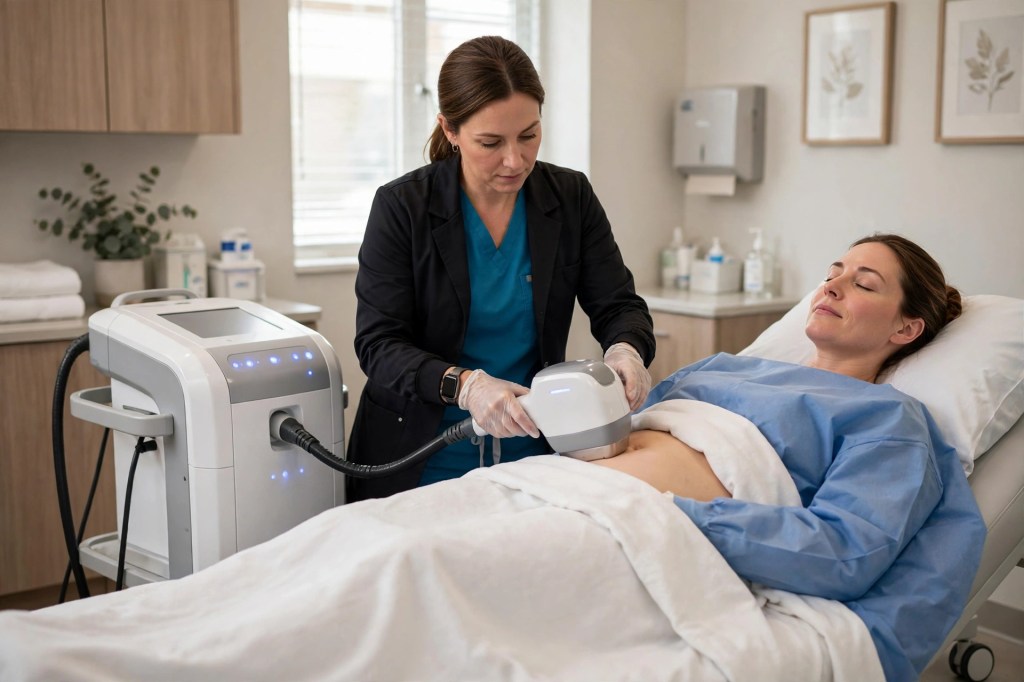
Most weight loss and body shaping options do one job. Diet and exercise reduce overall body fat, gym training builds muscle, and contouring treatments target stubborn pockets of fat. EMSculpt attracts attention because it is designed to work on both sides of the equation at once: it aims to reduce fat in a treated area while forcing the underlying muscle to contract far more intensely than voluntary exercise can achieve. It is a popular part of modern body contouring programs in Pakistan, but it is also surrounded by exaggerated claims. This guide explains how the technology works, what a session actually feels like, who it suits and, just as importantly, what it cannot do.
How the Technology Works
EMSculpt uses high-intensity focused electromagnetic energy. An applicator is placed over the target area, and the energy passes through the skin to stimulate the muscle beneath, producing thousands of strong contractions in a single session. These are sometimes called supramaximal contractions, because the muscle is contracted more forcefully and more repeatedly than a person could manage through exercise alone. The muscle responds to this workload by strengthening and thickening over a course of sessions, much as it adapts to training. At the same time, the intense demand placed on the area is associated with a reduction in the fat layer above the muscle. The treatment is non-invasive: there are no incisions, no anaesthetic and no downtime afterwards. General background on obesity and healthy weight management from Mayo Clinic is a useful reminder that technologies like this sit inside a bigger picture of weight care, not outside it.
What a Session Feels Like
Patients usually lie down while the applicator works on the abdomen, buttocks, thighs or arms. The sensation is unusual rather than painful: the muscle contracts and releases in cycles, with periods of tapping or vibration in between, and the intensity is adjusted to a level the patient can tolerate. Sessions typically last around half an hour, and a course usually involves several sessions over a few weeks, as advised by the treating doctor. There can be mild muscle soreness afterwards, similar to the feeling after a hard workout, and most people return to work or normal activities the same day. A clinic offering EMSculpt body sculpting in Pakistan will normally assess suitability first, because the treatment is not appropriate for everyone, including people with certain metal implants or pacemakers and women who are pregnant.
Which Areas It Treats and Who It Suits
EMSculpt is most often used on the abdomen and buttocks, and also on the arms and thighs. It suits people who are reasonably close to a healthy weight but want better muscle tone, definition or firmness in a specific area that diet and exercise have not fully addressed. It can also be considered as part of a wider program for patients working on body composition under medical supervision. A fuller overview of where it fits among other technologies is given in this guide to HIFU and slimming treatments in Pakistan, and this complete guide to body contouring and weight loss treatments in Pakistan explains how the different modalities compare.
Who It Does Not Suit: An Honest Word
EMSculpt is not a treatment for obesity on its own, and it is not a substitute for weight loss where significant weight needs to come off. A person with a large amount of excess weight will usually be advised to follow a structured medical weight management program first, focusing on nutrition, activity and any underlying causes, with contouring technologies added at the right stage. The NHS guidance on obesity makes the same general point: sustainable weight loss depends on overall energy balance and long-term habits, and no single device changes that. Expectations should be realistic. EMSculpt can improve tone and support fat reduction in a treated area over a course of sessions, but results vary between individuals, develop gradually and are maintained best alongside an active lifestyle.
Why Clinics Combine It with Other Treatments
Different technologies do different jobs. Radiofrequency is used for skin tightening and fat reduction, ultrasound cavitation targets localised fat, HIFU delivers energy at depth, and diet planning addresses overall intake. EMSculpt’s particular contribution is muscle: it strengthens and firms the muscle layer that other fat-focused treatments do not reach. At Health360, it is therefore combined with other modalities inside a doctor-supervised plan, selected according to the patient’s body profile and goals, with progress monitored and the plan adjusted over time. Sessions are non-surgical and fit around work and family life at the Faisalabad and Islamabad clinics, which helps patients complete the full course that results depend on.
Making the Most of a Course
Patients get more from EMSculpt when they treat it as part of training rather than a passive fix. Staying hydrated, eating adequate protein, keeping up regular activity and attending sessions as scheduled all support the muscle adaptation the treatment is trying to trigger. Think of the device as doing the intense contractions, and your routine as providing the raw materials and recovery that turn those contractions into lasting tone.
Frequently Asked Questions
Is EMSculpt painful?
Most patients describe strong muscle contractions and mild post-session soreness, similar to a workout, rather than pain. Intensity is adjusted to tolerance during the session.
Can EMSculpt replace the gym or a weight loss program?
No. It strengthens and tones specific muscle groups and supports local fat reduction, but it does not replace overall exercise, nutrition or medical weight management where significant weight loss is needed.
How many sessions are needed?
A course of several sessions is usually recommended, spaced over a few weeks. Your doctor will advise based on the area treated and your goals, and results develop gradually and vary between individuals.
Is there any downtime?
No. The treatment is non-invasive with no incisions or anaesthetic, and patients typically resume normal activities the same day.
This article is general information only and is not a substitute for a professional consultation or diagnosis.



Leave a Reply